
Hinge Markings: 8 Common Myths Debunked
May 2025
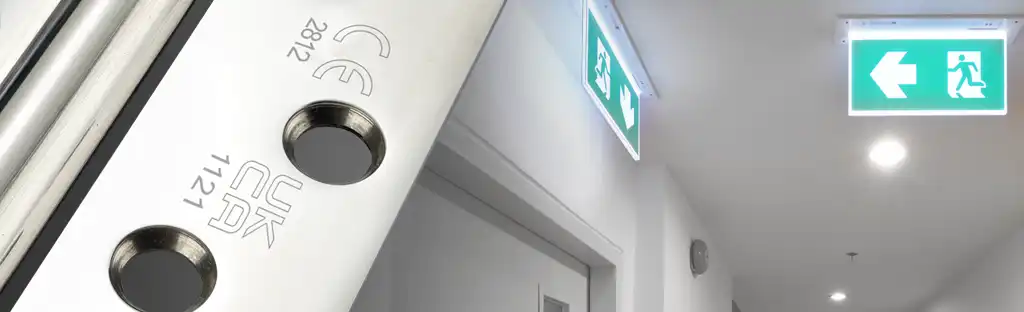
Understanding hinge markings is crucial for selecting the correct, compliant product for the job. However, there are several misconceptions that can lead to incorrect specifications, installation errors, or non-compliance.
The UK government has extended the recognition of the CE marking for construction products, including door hardware, beyond the previously set deadline of June 30, 2025. Eight of the most common pitfalls around hinge markings:
1.
Myth: All CE-marked hinges are fire-rated
Reality: A CE mark does not automatically mean a hinge is fire-rated. Only hinges tested and accredited to BS EN 1634 and carrying a fire rating eg FD30, FD60, are suitable for fire doors.
2.
Myth: BS EN 1935 Grade 14 hinges are always suitable for fire doors
Reality: While Grade 14 hinges are heavy-duty, they must also have a Digit 8 classification of 1 (fire-approved) to be legally used on a fire door.
3.
Myth: Fire door hinges don’t need intumescent pads
Reality: Many fire-rated hinges require intumescent pads as part of their fire test evidence. Omitting them can invalidate fire certification. Always check the hinge’s fire test documentation.
4.
Myth: All stainless steel hinges are corrosion-resistant
Reality: Not all stainless steel is the same. Grade 304 stainless steel provides good corrosion resistance, but Grade 316 is needed for marine environments. To be sure, check the hinge’s BS EN 1670 corrosion rating (Grade 5 for the highest resistance).
5.
Myth: A heavy-duty hinge means it can carry any door weight
Reality: The BS EN 1935 classification system (Digits 1-7) specifies the maximum door weight and test cycles a hinge can handle. Using the wrong grade may lead to premature failure. Check out our blog about hinge load-bearing here.
6.
Myth: Hinges can be swapped like-for-like without checking the door certification
Reality: Fire doors and security doors are tested as a system. Changing hinges without checking the door’s test evidence can lead to non-compliance and even invalidate a fire door certification.
7.
Myth: UKCA marking has replaced CE marking in the UK
Reality: The UK government has extended the recognition of the CE marking for construction products, including door hardware beyond the previous June 2025 deadline. So, while door hardware in the UK Britain can continue using either the CE or UKCA marking, products intended for the EU markets, the CE marking remains compulsory.
8.
Myth: A security hinge automatically meets PAS 24
Reality: While PAS 24 doors require security-rated hinges, not all hinges marked as ‘security hinges’ meet the PAS 24 standard. Always check if the hinge has been tested as part of a PAS 24-certified doorset.


